
Trip guides
Connectivity for Pacific Island Hopping
Updated 27 September 2026
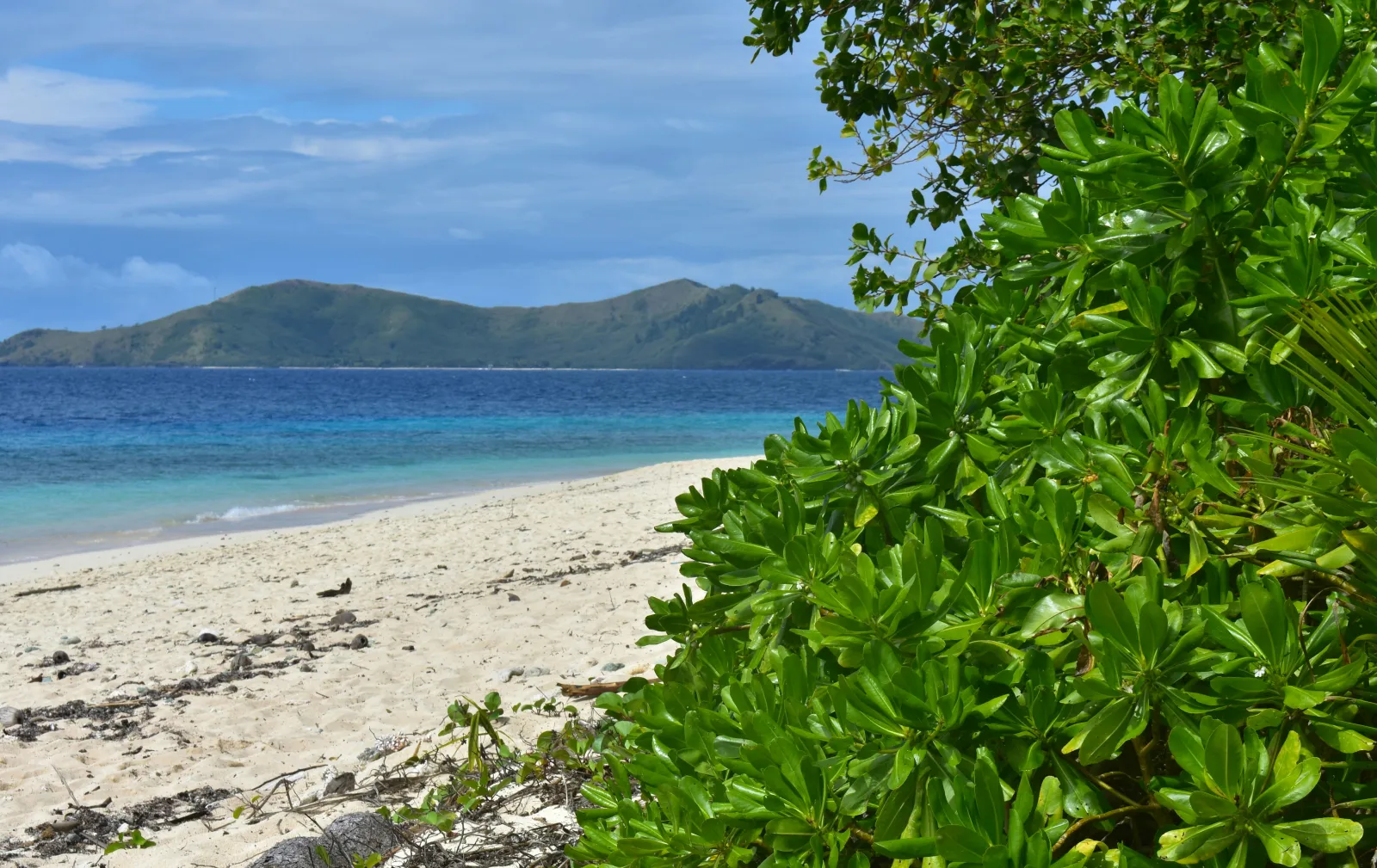
Pacific Islands mobile coverage is better than most people expect around the main towns, and patchier than they expect everywhere else. The Pacific Islands are some of the most popular short-haul trips for Kiwi travellers - and also somewhere connectivity gets treated as an afterthought more than most destinations, on the assumption that a small island resort means no signal is worth worrying about either way. A lot of this travel isn't a typical holiday either - with large Fijian, Samoan, Tongan and Vanuatu-heritage communities across New Zealand, plenty of these trips are visiting family rather than checking into a resort, which changes what "good connectivity" even means: less about streaming from a swim-up bar, more about a working number for relatives to reach you, or maps that work the moment you're off the tourist strip.
Quick recommendation
Heading to Fiji for around a week and mainly using maps, messaging and the odd social post? Start with the 10 GB plan (30 days, $54.99) on the Fiji eSIM plans page. Plans start from $16.99. Island-hopping to the Mamanucas or Yasawas, or staying somewhere without reliable resort Wi-Fi? Size up from there.
Why coverage varies so much between islands
Coverage across Fiji, Samoa, Tonga and Vanuatu is generally strongest around each country's main hub - Nadi and Suva in Fiji, Apia in Samoa, Nuku'alofa in Tonga, Port Vila in Vanuatu - and thins out fast the further you get from them. That's not a sign something's wrong; these are developing island nations where mobile infrastructure has been built out hub-first, the same pattern as most of the world, just more noticeable on a small island than in a country with an interstate highway between cities. An outer island reached by a two-hour boat transfer can have patchy or no coverage even when the main island fifty kilometres away has a solid 4G signal.
It's also genuinely fragile in a way most travellers don't think about until it happens: in January 2022, the Hunga Tonga-Hunga Ha'apai eruption severed Tonga's only undersea internet cable, cutting the country off from the rest of the world for weeks while it was repaired. That's an extreme example, but it's a real illustration of why "it'll probably be fine" is worse advice here than for a trip to somewhere with several redundant networks and cables backing each other up.
Why it's still worth sorting before you fly
- Resort Wi-Fi is often slow, limited, or charged separately - not a given the way it can be at a city hotel, especially at smaller or more remote properties, and non-existent if you're staying with family rather than at a resort at all.
- You'll want maps and messaging working for day trips off the resort - boat transfers, markets, village visits - not just poolside, and cyclone season (roughly November to April across the South Pacific) is exactly when you most want weather updates working reliably.
- Multi-island trips mean crossing networks, and an eSIM installed before you fly means one less thing to sort once you land, whichever island you start on - useful given how few of these transfers run on a fixed schedule you can rely on.
The four destinations
- Fiji - the most-visited of the four from NZ by a wide margin. Nadi and the Coral Coast are well covered; boat-transfer islands like the Mamanucas and Yasawas thin out the further out you go, so check before assuming a remote island resort has the same signal as the mainland. See Fiji eSIM plans.
- Samoa - split across two main islands, Upolu (Apia, the capital) and Savai'i, linked by a car ferry that doesn't run to a schedule you should plan a tight itinerary around. Coverage is solid around Apia and thins out heading to Savai'i's quieter side. See Samoa eSIM plans.
- Tonga - the most infrastructure-fragile of the four (see the 2022 cable cut above), and spread across more than 170 islands, most of them uninhabited. Nuku'alofa has reasonable coverage; the outer island groups (Ha'apai, Vava'u) are where checking ahead matters most. See Tonga eSIM plans.
- Vanuatu - over 80 islands, with Port Vila as the main hub and Tanna (home to an active, walkable volcano) among the more popular outer-island trips. The same hub-and-thin-out pattern applies - solid around Port Vila, patchier the further you travel. See Vanuatu eSIM plans.
What to check before you go
Each destination's own plan page lists the network(s) it connects through, which is worth a quick look before you fly, particularly for smaller or more remote islands on your itinerary. If you're not sure how much data to size a plan at - especially for a trip that's more about visiting family than sightseeing - see how much data you actually need. See Fiji, Samoa, Tonga, or Vanuatu for current plans and coverage details, or browse the full list if you're headed somewhere else in the Pacific.
Staying in touch when there's no signal
On outer islands and remote resorts, plan for stretches with no signal at all. Tell family where you're staying and when you'll be back in range, download offline maps and anything you want to read or watch before you leave the main island, and keep screenshots of bookings, boat times and your accommodation's phone number.
It's also worth registering your trip on SafeTravel, the NZ government's travel advisory service, so you can get updates if something happens while you're away.
Cyclone season and weather alerts
The South Pacific cyclone season runs from 1 November to 30 April. If you're travelling then, having data for weather updates and airline notifications matters more than usual - flights and boat transfers can change at short notice. Keep your eSIM active for the whole trip, and make sure your airline and accommodation have a way to reach you.
Resort Wi-Fi vs mobile data
Resort Wi-Fi in the islands ranges from decent to painfully slow, and it's often limited to the lobby or pool area. It's fine for messages in the evening, but mobile data is what keeps maps, messaging and bookings working on day trips, at markets and on boat transfers - and if you're staying with family rather than at a resort, it may be your only connection.
One eSIM or one per country?
If you're visiting more than one of these places, a regional bundle means one eSIM for the whole trip - no new QR code at each border. If you're mostly in one country, its own plan is usually cheaper. Current options:
- Oceania · 8 countries - covers all 4 of the places in this guide, from $24.99
Single-country plans
The Pacific Islands FAQs
Do I need data if I'm staying with family in the islands?
It helps a lot. Family homes often don't have Wi-Fi, so an eSIM is what keeps you on WhatsApp, maps and banking apps. Your NZ number still works alongside it for texts.
Will my phone work on Fiji's outer islands?
Often around the resort or main village, but coverage thins out the further you go from Viti Levu, and some small islands have none. Download maps and let family know you might be out of touch.
When is cyclone season in the Pacific Islands?
1 November to 30 April. If you're travelling then, keep data on for weather alerts and airline updates, and have travel insurance sorted.
Can I use one eSIM across Fiji, Samoa and Tonga?
Sometimes - check the regional bundles on the plans pages for one covering every country on your trip. If you're mostly in one country, its own plan is usually cheaper.
Is resort Wi-Fi enough in the Pacific Islands?
For evenings at the resort, usually. For day trips, boat transfers and staying with family, mobile data is far more reliable.
Sources
Information checked 27 September 2026. Entry rules, fees and local details change - confirm anything important with the official source before you travel.
- Pacific cyclone season: 1 November to 30 April - SafeTravel (safetravel.govt.nz)
- Register your travel - SafeTravel (safetravel.govt.nz)
- 2022 Hunga Tonga-Hunga Ha'apai eruption and tsunami - Wikipedia (en.wikipedia.org)